


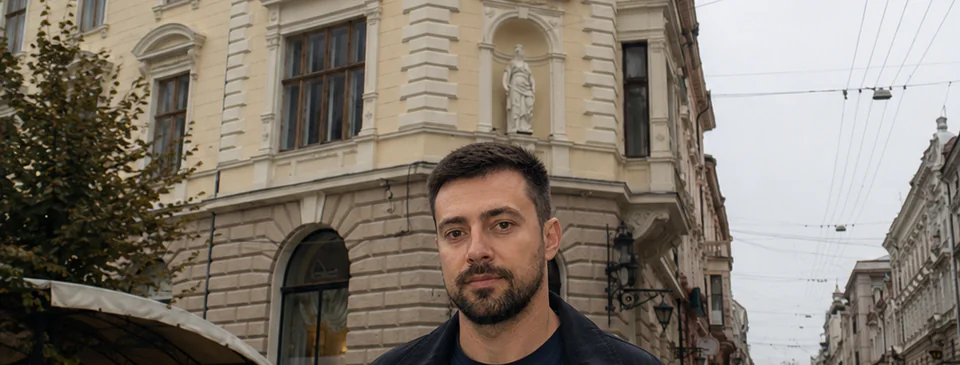
“I Wasn’t Trying to Be the Perfect Salesperson”: How Marko Levchenko Got Hired at Softline Crew
In sales, it is easy to confuse confidence with volume. Especially when you look at the profession from the outside: a manager is supposed to speak quickly, handle objections smoothly, close deals, stay sharp with numbers, and always look as if everything is under control. Job descriptions often put it even more bluntly: they need an active, ambitious, results-hungry person who knows how to push a client toward a decision and is not afraid of tough targets.
Marko Levchenko from Chernivtsi takes that image calmly, but without much enthusiasm. He has been in sales for a long time: he started as a sales representative, traveled across western Ukraine, spoke with owners of small shops, offices, warehouses, and production businesses, later moved into B2B sales, and gradually found his way into SaaS. Today Marko works as a Sales Manager at Softline Crew, a company that builds automation, digital solutions, and AI tools for businesses.
His story is interesting not because he “passed the interview correctly” and received an offer. There are plenty of stories like that, and they often sound the same. What is more interesting is something else: Marko joined a tech company not by performing the role of an aggressive salesperson, but through a completely different approach — listening, understanding the situation, not overpromising, and honestly saying where he still needed to learn.
We talked to him about how he looked for a job in Ukraine, why Softline Crew caught his attention, which interview questions made him think instead of giving template answers, and what candidates should understand if they want to get into SaaS, AI automation, or simply a company where sales are not built on pressure.

“What caught my attention was that there was nothing about pushing the client”
Marko says his desire to join Softline Crew did not come from the company name. First, he saw the vacancy and noticed what was missing from it.
“What caught my attention was that they did not write about aggressive sales, pushing clients, or burning targets at any cost. The description made it clear that the product starts with understanding the client’s processes. That matters to me, because I don’t like selling someone something that will later make their life harder.”
To someone outside sales, that may sound too soft for the profession. But in SaaS, especially when we are talking about automation and AI solutions, softness here is not about weakness. It is more about precision. The client is not buying a box they can put on a shelf, and not a service that ends in an hour. They are buying a change in their working process. And if that change is chosen incorrectly, it will not simply fail to help — it will add more chaos.
Marko explains it simply: you can show the client a beautiful presentation, list the features, talk about the benefits, but none of it matters if you have not first understood how their work is organized right now.
“A client may say, ‘We need automation,’ but sometimes behind that there is complete chaos with incoming requests, lost customers, and an administrator who manually moves data from one spreadsheet to another in the evening. My job is not just to open a presentation and show nice features. I need to understand where the person is really hurting, where they are losing money, time, and nerves, and only then talk about which part of the product actually fits them.”
This is where the main theme of Marko’s whole story becomes clear. He did not come to Softline Crew to sell technology for the sake of technology. He was interested in a company where sales is not a person with a loud voice, but a person who can conduct a small business audit right inside a conversation.
A childhood close to small business
Marko has no invented romanticism around entrepreneurship. He grew up in a family where money was counted carefully. His father worked as an electrician, and his mother ran a small household chemicals shop at the market. From his teenage years, Marko helped her speak with suppliers, negotiate discounts, and watch which goods sold quickly and which stayed on the shelf for months.
Today he says that this experience shaped his attitude toward sales more than anything else.
“Since childhood, I saw that for a small business, every unnecessary purchase, every purchasing mistake, every wrong supplier was not theory, but real money out of someone’s pocket. My mother could sit in the evening and calculate why one product sold quickly while another was sitting there like dead weight. I didn’t know the word ‘analytics’ back then, but I already understood the meaning.”
This detail explains a lot. Marko does not like selling “a bigger package just because you can.” For him, this is not a pretty ethical stance, but a habit that grew out of real small business experience. If a person needs a basic set of features, it is better to honestly start there than to burden the client with an expensive solution they will not use.
In complex products, that honesty can work better than any closing technique. A client quickly feels when they are being led toward the most expensive option, and just as quickly feels when someone is genuinely trying to understand their situation.
From sales representative to SaaS
Before Softline Crew, Marko went through a path that often stays hidden behind a few lines on a CV. In the document, you can write: sales representative, B2B sales, client work, negotiations. But behind those lines are years of conversations with people who are not always ready to listen, do not always trust you, and cannot always quickly explain what they need.
“When you spend several years traveling between cities, walking into shops, offices, warehouses, and small production sites, you start to feel when a person is speaking just to be polite and when they actually have a real need. It also helps you not get lost when a conversation does not go according to plan.”
That experience also helped him during interviews. Marko was not frightened by difficult questions, pauses, doubts, or follow-up questions. In sales, a conversation is rarely ideal: the client has no time, they are irritated, they have already had a bad experience, they do not trust you, they are listening with one ear. So an interview did not feel like something completely foreign to him. It is also a conversation where the important thing is not to memorize the correct line, but to understand what the person across from you wants to see.
But the move from traditional sales into SaaS required him to rebuild his thinking. In more familiar sales environments, there is often a temptation to move faster toward the offer: here is the product, here is the price, here are the terms. SaaS does not work like that.
“I had to rebuild my sense of speed. In traditional sales, you often want to move to the offer faster. In SaaS, you need to ask more deeply about how the client’s work is organized now, who makes the decision, where data gets lost, and which tools they have already tried. Before, I thought more in terms of ‘closing the deal.’ Here, you need to think in terms of ‘will this solution actually fit into the client’s life?’”
This phrase captures the difference well. A SaaS sale does not end the moment the client says “yes.” If the solution does not fit into daily work, if the administrator does not understand how to use it, if the manager does not see the analytics they need, if employees keep doing everything in spreadsheets and messengers, the deal may formally be closed, but the value has not appeared.
How Marko looked for a job
Marko searched for vacancies on major job sites, on LinkedIn, in Telegram channels for sales and tech roles, and also asked acquaintances from the B2B environment. But he did not send out his CV by the hundreds.
“There were not a hundred applications, I can’t do it that way. Probably a little over twenty normal applications where I at least understood who I was writing to. I did not send my CV to every vacancy with the title Sales Manager. First I looked at the product, then at how the company talks about clients, then at what exactly they expect from the person.”
This is an important thought for anyone tired of job hunting. When there are many applications, it creates the illusion of movement: you sent twenty CVs in one day, so it feels like you did everything possible. But if a person does not understand where they are applying, they quickly start getting confused about companies, roles, and their own motivation. In an interview, that is noticeable.
Marko filtered out vacancies with too many loud words and too little substance. He was wary of phrases like “sales shark,” “push clients to close,” and “work toward maximum results without unnecessary questions.” He also passed by companies where the description did not make it clear what was being sold, who it was being sold to, and why a client should pay for it.
“If the employer themselves cannot calmly explain the product in the vacancy, then it will be hard for me to explain it to a client later without feeling internally ashamed.”
For him, salary and job title were not the only things that mattered. Income mattered, of course. Marko says directly that he is not going to pretend money is not important to him. But money alone could no longer buy him. He was looking for a product he would not be ashamed of, a team without pressure, and an environment where he could grow in digital solutions.
What caught him about Softline Crew was that the company talked not only about sales targets, but also about understanding the client’s processes. It was clear that they needed a Sales Manager not as a person who loudly and confidently leads someone to payment, but as a person who can break down a situation, ask questions, and explain the value of a solution.
“I did not pretend I knew AI better than I did”
Of course, there were doubts. Marko understood sales, B2B, small business, objections, and negotiations. But AI automation seemed like a more complex field than familiar accounting services or classic B2B products.
“I am not one of those people who says, ‘Yes, I can do everything,’ after reading three articles. I understood sales, B2B, small business, and the client’s pain, but AI automation is still more complex. I had doubts about whether I would be able to get into the product side quickly enough.”
During the interview, he did not try to look like a technical expert. And, as he sees it, that worked in his favor.
“I honestly said that I would need to go deeper into AI solutions, but that I understand clients well, especially small and medium-sized businesses. My strength is not that I know every technical detail from day one. My strength is being able to understand the client and not being afraid to ask normal questions.”
For candidates, this is a separate lesson. Sometimes in an interview, you want to cover every weak spot with a polished phrase. You say that you learn quickly, that everything is clear, that the experience is almost the same, just packaged differently. But with complex products, trying to seem stronger than you really are can work against you. The employer will still see where the candidate has real depth and where there is only a confident surface.
Marko chose a different path: to show that he understands clients, knows how to sell complex solutions, and is ready to learn the product side without putting on a performance.
First contact: not a checkbox filter
The story with Softline Crew began with a standard application. But before sending his CV, Marko reread the vacancy several times, looked at what the company does, how it talks about its solutions, and who its clients might be. Then he adapted his CV so that it was not just a list of previous workplaces, but an explanation of his experience with B2B clients and small businesses.
He remembers the first contact with the company because it was not a dry message in the style of “when would be convenient for an interview?”
“At first, there were several normal questions about my experience, what kind of clients I had worked with, what product I had sold, and how I felt about more complex solutions. The conversation did not feel like a checkbox filter. You could immediately feel that they cared about understanding not only the experience, but also the person’s logic.”
At the first stage, he was asked about his path, clients, deal cycle, and working with objections. But Marko felt they were looking not only at the content of the answers. It was more important to understand how he thinks.
“For example, can I explain why a client has doubts, instead of just saying, ‘They are not ready to buy.’ In sales, that is an important point. If you only see refusal, you understand nothing. If you see the reason behind the refusal, then you can work with it.”
One question made him think especially hard. He was asked what he does if he realizes that the client does not currently need the most expensive package.
That kind of question is difficult to answer with a template. You can say something nice about long-term relationships, but an experienced interviewer will quickly feel whether there is real practice behind it. Marko answered directly: if a client does not need the large package, he will not sell it at any cost. In a month, the client will understand that they overpaid, and trust will be gone. It is better to start with what solves the current problem, and then develop the cooperation from there.
“If you put a system on top of chaos, the chaos becomes digital”
The most important stage of the selection process was connected not just with sales, but with understanding business processes. Marko discussed a hypothetical situation with the team: there is a business where requests come in through different channels, some of them get lost, managers handle clients in their own separate ways, and the owner cannot see proper analytics. The task was not simply to “sell automation,” but to understand which questions should be asked first.
“I said that first you need to find out exactly where the process breaks: at the point where the request comes in, in the handoff between people, in task control, or in analytics. Because if you don’t understand the cause, you can put a beautiful system on top of chaos, and the chaos will simply become digital.”
This is probably one of the central lines of the whole interview. It explains well why in this type of sales it is not enough to know the product features. You need to understand how the client’s business lives before the purchase. Where requests appear. Who accepts them. Who responds. Where information gets lost. Where the owner starts manually controlling something that should already work as a system.
Marko translated his old experience into the language of processes. He did not simply say, “I sold products” or “I worked with B2B.” He explained that for many years he had seen small companies from the inside: who makes the decision, who actually uses the tool, who resists change, where the owner counts money, and where the administrator is drowning in manual work.
For a SaaS company, that matters. A product is not sold into thin air. It enters a specific business, to specific people, with their habits, fears, fatigue, and resistance.
How he prepared for the interview
Marko prepared for the interview not like an exam, but like a first meeting with a potential client. He looked at what the company does, what problems it solves, and which processes it can automate. He wrote down questions: who the typical client is, what the deal cycle looks like, where sales gets involved in process analysis, and how the team hands the client over afterward.
He also prepared examples from his own experience in advance. Not just “I work well with clients,” but specific situations where the client needed to choose not the most expensive option, but the most suitable one.
“A person can read the CV anyway. In an interview, it is important to explain what stands behind the lines: your approach, the mistakes you have already made, and what you have learned.”
The hardest part was honestly answering the question of where the new role would be most difficult for him. He could have chosen a safe answer like “I am too responsible,” but Marko said that at first he would need to strengthen the technical side and understand the AI logic of the solutions more deeply so that he would not speak in generalities.
That kind of answer is uncomfortable because it shows a weak spot. But that is exactly where its strength lies. If a person pretends they have understood everything and then gets confused in front of a client, the problem becomes much more serious.
Sales without pressure
In the interview, Marko showed that he knows how to sell without pressure and memorized scripts. Not through broad statements, but through examples.
He spoke about situations where a client came in asking for one solution, but after the conversation it became clear that they first needed to bring order to another area. In such cases, he does not start with a presentation. First he asks questions: how do you work now, where do you lose time, who uses this, what have you already tried, why did it not work?
“If the person sees their own problem during the conversation, you don’t need to pressure them into the solution. They begin to understand why they need it.”
Marko often explains complex things through everyday examples. Automation can be described in technical terms, or it can be said more simply: if orders at a café come from Instagram, by phone, and through the website, and the administrator keeps everything in their head, the problem is not that the administrator is bad. The problem is that the process depends on one person’s memory.
That kind of explanation immediately changes the conversation. The client stops seeing the product as a set of features and starts seeing their own working day.
Another image Marko uses: selling without listening is like a doctor prescribing pills before an examination. Maybe they will guess right sometimes, but that is not a system.
“The client often does not formulate the problem precisely themselves. They say, ‘We need a CRM,’ when in reality they have no rules for processing incoming requests. Or they say, ‘We need AI,’ when what they actually need is proper task control. So first you listen, then clarify, then test the hypothesis, and only after that offer a solution.”
What raised red flags in other vacancies
The job search experience showed Marko that the hardest thing for a Sales Manager in Ukraine is telling a normal vacancy from pretty packaging.
In sales, many descriptions look alike: client development, negotiations, CRM, meeting targets, ambitious team. But behind those words, the reality can be completely different. In one company, there is a product, a funnel, support, analytics, and clear onboarding. In another, a person is simply given a list of contacts and told, “Well, go sell.”
Marko was wary of vacancies that promised very high income but did not explain what it was made of. Descriptions that talked a lot about “unlimited opportunities” but almost nothing about the product, clients, average deal size, and deal cycle also raised questions.
“Sometimes a description is so energetic that it feels like they are selling the vacancy itself to the candidate, not telling the truth about the job. I am fine with difficult tasks. But difficulty should be named honestly, not hidden behind words like ‘dynamic environment.’”
In interviews, he was concerned when a company avoided specific questions. You ask about the target — they say “everything is realistic.” You ask about leads — they say “we have a lot of opportunities.” You ask about the product — you hear general words. For sales, where there is already a lot of uncertainty, that kind of fog at the start is a bad sign.
There were interviews after which Marko understood: this was not his story. For example, when they barely talked about the product, but talked a lot about how you need to be “hungry for money.” Or when the manager said directly: “The main thing is to close the deal, and then we’ll figure it out.”
“You can’t do that in SaaS, because the client will then live with this solution every day.”
Why he did not accept the first offer
Marko admits that experience and stubbornness helped him avoid accepting the first offer that came along. When a person has already seen different companies, they understand that a bad match is expensive. You can start quickly, receive a salary, and burn out two months later because the product does not fit, the sales style breaks you, and the promises made to clients create internal shame.
“I reminded myself: I don’t just need a job. I need a place where I can grow and not break my approach.”
For him, a company’s honesty during the interview is part of its corporate culture. If the role is embellished, the person will still learn the truth in the first weeks. Only then, irritation will appear on both sides. It is much better to hear immediately: the product is complex, the targets are serious, the onboarding works like this, and it will be hard here. You can work with that. A beautiful picture that collapses in the first month is much harder to work with.
Marko believes it is important for a candidate to apply not only quickly, but precisely. A quick application helps, especially if the vacancy is good. But if you send your CV everywhere, you eventually stop understanding why you want this specific role.
“Fewer applications are better if they come with proper preparation. An employer feels when a person has not come just ‘somewhere in sales,’ but understands why this particular company interests them.”
First experience inside Softline Crew
When Marko joined Softline Crew, part of his expectations matched reality. Internally, the team really did not try to sell technology for the sake of technology. In conversations with the team, they constantly returned to the question: what client problem are we solving?
The feeling of calm communication also matched. That does not mean the work became quiet and predictable. Clients change inputs, tasks can be urgent, and processes require attention. But inside the team, according to Marko, there is no habit of creating panic where a proper breakdown is needed.
The depth of the product turned out to be harder. During an interview, it is easy to understand the general logic: automation, AI, processes, data. But once you start working, you see many nuances: different client scenarios, limitations, integrations, user expectations, and technical details.
“Sometimes the client themselves wants an AI system, but they are not ready to describe their current process. And then your job is not just to sell, but to help them break down their own working day into parts.”
Onboarding was clear: materials, meetings with the team, product explanations, case breakdowns, immersion in the CRM and internal processes. But in sales, you cannot learn everything from documents alone. You start truly understanding the product when you hear real questions from clients.
Marko notes that it was important for him to be able to ask questions. Nobody pretended that a newcomer should know everything on the second day.
Culture is visible not in the vacancy description
When asked what he felt in Softline Crew’s corporate culture not through words, but through actions, Marko answers: support without unnecessary noise.
If he brought a question about a client, the team did not say, “You’re sales, figure it out.” They helped him understand the technical side, highlighted risks, and explained how to formulate the solution better.
Another important point is respect for time. Meetings are not held just for the sake of meetings. If people gather, it means there is a topic, a decision, and a next step.
For Marko, calm communication is not about quiet voices and polite phrasing. It is about people not shifting blame, but figuring out what to do next.
“If you see that a client is stuck, that there is an unclear place in the process, that information has been lost, you don’t stay silent. But you also don’t run around shouting. You simply write, explain the situation, and suggest an option.”
If something does not work the first time, the team does not ignore the mistake, but they also do not turn it into a reason for pressure. They look at where information was missing, where the client did not understand the value, where they themselves failed to clarify something important. That approach is close to Marko: a mistake in sales is unpleasant, but if you break it down, it becomes material for growth.
The moment when it became clear: “I am in the right place”
One important moment happened after a conversation with a client. It was a small business with a lot of manual work, requests coming from different channels, and an owner who was tired of controlling everything through message threads. The conversation did not start with a big presentation, but with a breakdown of how a request moves from the first message to payment.
At some point, the client said: “Now I can see for myself where we are losing time.”
“And I thought: this is my job. Not to force a solution onto someone, but to help a person see their process more clearly.”
After moving to Softline Crew, Marko’s work became deeper. He had listened to clients before too, but now he needed to better understand the connection between people, data, and tools. In SaaS, it is not enough to convince the owner. You need to think about how the administrator, the manager, the department head, and the accounting team will use the solution.
A good solution can face resistance if it is inconvenient to implement into daily work. That is why Marko began asking more not only about business goals, but also about the client’s real working day.
What did not work in the first weeks
Marko does not try to present onboarding as a smooth process. In the first weeks, he sometimes explained the product’s value too quickly. It seemed to him that if the client’s task was already clear, he could show the solution. Later it became clear that he should have asked a couple more questions before that.
“In SaaS, especially with automation, one missed question can change the whole picture. Now I am calmer about pauses and clarifications. It is better to spend five extra minutes understanding the situation than to deliver a beautiful presentation in the wrong direction.”
He also underestimated the number of variations among clients. From the outside, it seems simple: requests, CRM, communications, reports — everything is clear. But two similar businesses can live by completely different processes. One salon works through an administrator and Instagram, another through a website, repeat visits, and mailings. A small production business lives through orders, deadlines, stock balances, and manual control.
Old sales experience sometimes got in the way too. When you have heard a similar pain point dozens of times, you want to assume faster what the client needs. But in SaaS, similar pain does not always mean the same cause.
“Now I try to slow myself down and check. Not to think on behalf of the client, even when I really want to say, ‘I already understand.’ Because you can understand the wrong thing.”
What he would do differently
If Marko were going through the job search stage again, he would start studying not only vacancies, but companies earlier. A vacancy is the entrance door. Behind it there is a product, a market, clients, a communication style, promises, a team, and processes. All of that is worth looking at before applying.
He would also prepare better cases about his work: not just “sold,” but “what the situation was, what I did, and what the result was.”
In interviews, he would no longer try to answer “too correctly.” There is a temptation to guess what the employer wants to hear, but it is better to honestly show your approach. If it does not fit the company, that is also a result.
“If I say that I don’t like pressuring clients, and the company is looking specifically for pressure, then we are not on the same path. It is better to understand that in an interview than after a month at work.”
What candidates in sales often stay silent about
In Marko’s opinion, many candidates do not say out loud that it is hard for them to sell a product they do not believe in. That sounds dangerous: as if the person is not flexible enough, not motivated enough, not “sales” enough. But in reality, trust in the product is not romance. It is a working tool.
Sales can hold up for a while on technique, scripts, and motivation. But if there is an internal feeling that the client does not need this, or that the promises are too polished, a person burns out quickly.
In SaaS sales, the word “technology” is also often romanticized. From the outside, it seems like a modern product, AI, automation, beautiful interfaces, smart clients. In reality, there is a lot of routine: clarifications, follow-ups, CRM, objection handling, rescheduled meetings, technical questions, client doubts, budget approval.
“It is interesting work, but not an easy walk with a presentation.”
Marko is also cautious about companies that promise fast growth but do not explain what that growth is supposed to come from. Fast growth is not a problem in itself. But it needs to rely on the market, product, team, process, budget, and strategy. If a company simply says “you can grow quickly here,” the candidate should ask: how exactly? By what criteria? Who has already grown that way?
If there are no answers, it looks more like a pretty carrot held in front of your face.
What a candidate should prepare before a SaaS interview
Marko advises starting with the product. Before the interview, you need to understand at least at a basic level what problem the company solves, who it solves it for, and why the client pays for it.
Second, prepare your own cases. Not in the format of “I am communicative and stress-resistant,” but through specific situations: what kind of client it was, what the task was, what stood in the way of the deal, what you did, and what the result was.
Third, prepare questions for the employer. A good interview is not a candidate’s monologue, but a normal exchange.
Marko advises asking:
who the company’s typical client is;
what the deal cycle looks like;
where leads come from;
how onboarding is structured;
what the expectations are for the first three months;
what counts as a good sale;
what happens to the client after the deal.
The last question is especially important for SaaS. A closed deal and a successful sale are not always the same thing. You can sell quickly, but if the client does not implement the product, does not understand it, and leaves, that cannot be called a strong sale.
How to get into SaaS without much SaaS experience
Marko believes that a candidate without extensive SaaS experience can still show value. To do that, they need to talk not only about selling, but also about the client.
Skills from other fields can be a strong base: the ability to ask questions, handle objections, explain complex things in simple language, maintain contact, and understand business logic. The main thing is not to pretend to be a SaaS expert if you are not one yet.
“A company can teach a product, but it is harder to teach a person to speak to a client respectfully.”
For sales in digital solutions and AI automation, the ability to listen, ask precise questions, and not be afraid of complex processes is especially important. You also need to explain technology in simple language. The client does not always need terms. They need to understand what will change in their work tomorrow morning.
Discipline in the CRM, working with data, patience with long deals, and normal interaction with the technical team also matter. Sales in these products is a bridge between the client and the solution.
How to talk about money
Money, in Marko’s opinion, should not be an uncomfortable topic. It is part of the job. But it should be discussed calmly and professionally.
A candidate should understand what income level they are considering, what it can consist of, and what expectations they have for the fixed part and bonuses. But it is important to ask not only “how much,” but also “for what.”
What is the target? What does the funnel look like? What is the average deal size? What conditions are in place for achieving results? Are there leads? How is the deal cycle structured? What counts as a completed result?
Then the conversation about money sounds not like emotional bargaining, but like a discussion of working conditions.
Advice for a candidate from a regional city
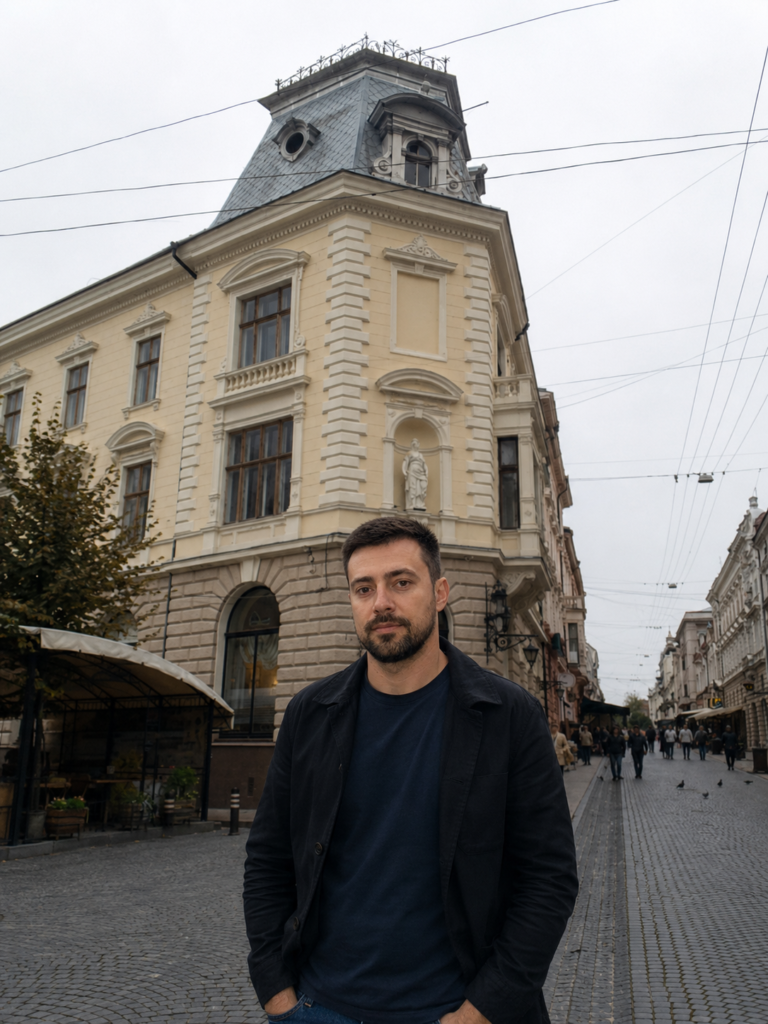
Marko is from Chernivtsi, and he does not see a regional city as an obstacle to a tech career.
“Do not think that a regional city is a sentence. You need to show not your address, but your level of thinking.”
He advises candidates to learn a product-oriented approach, understand business processes, improve their English if it is needed, put their CV in order, and send thoughtful applications. And not to be embarrassed by their experience.
Sometimes a person from a regional business understands a real client better than someone who has only seen polished presentations. That is not a reason to feel weaker. It is experience that needs to be translated correctly into the language of the company.
Job search is also a sale
The story with Softline Crew changed Marko’s attitude toward job searching. He realized that the search is also a sale, but not in a bad sense. A candidate should not “hard-sell” themselves to an employer. They should honestly show what problem they can solve, what approach they have, and where they still need to grow.
“Before, I looked at vacancies more as a candidate. Now I look at them as someone who is also choosing a partnership. The company chooses me, but I also choose the environment, the product, and the people.”
After the move, Marko made an important conclusion about himself: his calm style is not a weakness. In sales, it can sometimes feel like you need to be louder, faster, tougher. But for complex products, something else can work: listening, asking questions, not applying pressure, and returning to the essence.
A good company, in Marko’s opinion, is not one where everything is perfect. He has never seen those. A good company is one where problems are not swept under the rug, but examined. Where the product can be discussed honestly. Where sales is not left alone with promises that cannot be fulfilled. Where culture is visible not in the vacancy description, but in how people answer questions, help a newcomer, and speak when something goes wrong.
If he were looking for a job again, he would start with himself: write down what kind of product he is interested in selling, which sales style suits him, which clients he is strong with, and where he needs to learn. Then he would choose companies, not just vacancies. And only after that would he send applications — not massively, but precisely.
He phrases the advice he would give himself on the first day of the job search briefly:
“Do not rush to agree just because you are tired of searching. Fatigue is a bad adviser. It is better to send fewer applications, but make them higher quality. And do not try to seem like a different person. You will still have to work as yourself later, not as the version you acted out in the interview.”
And for those who are now tired of applications, interviews, and uncertainty, Marko has one more important thought: fatigue does not mean there is something wrong with you. Job searching really can be exhausting. There is a lot of silence, a lot of unclear answers, a lot of vacancies that are written beautifully but contain little truth.
But that is exactly why it is not worth turning the search into an automatic mailing of yourself anywhere. It is better to stop, rebuild your CV, choose companies more precisely, and prepare proper questions.
Sometimes one good application is stronger than twenty random ones.
And if Marko had to sum up in one sentence what helped him get hired at Softline Crew, he answers like this:
“What helped me was that I was not trying to be the perfect salesperson. I showed my real approach: first understand the person and their process, and only then offer a solution.”